Our Services

Website Strategy
Our website strategy emphasizes a user-first approach, delivering a smooth experience on all devices. We focus on fast load times, easy-to-use navigation, and captivating content to keep visitors informed and engaged. By implementing top SEO practices, we increase visibility and drive traffic, ultimately aligning with your business objectives and strengthening your online presence.

Website Designing
Figma is a cloud-based tool for designing interfaces, interactive prototypes, and user experiences (UX/UI). It enables real-time collaboration, making it easy for team members to work together and share design files seamlessly, which is particularly effective for team-oriented design projects.
Technology
Our web development approach incorporates cutting-edge technologies for both the frontend and backend. On the frontend, we use React.js and Vue.js to build dynamic, responsive interfaces. For the backend, we employ Node.js and Laravel to create robust, scalable solutions. This blend of technologies ensures a smooth user experience and well-maintained, efficient code.
Static Website
A static website delivers consistent content to users, unlike dynamic websites that generate content on-the-fly. Static websites are pre-built, providing the same information to all visitors. They are well-suited for informational sites, portfolios, and small business pages due to their simplicity, speed, and security. With minimal server resource requirements, static websites load faster and reduce hosting costs. Additionally, they are easier to develop and maintain, making them an attractive option for individuals and businesses looking for a cost-effective online presence.
Dynamic Website
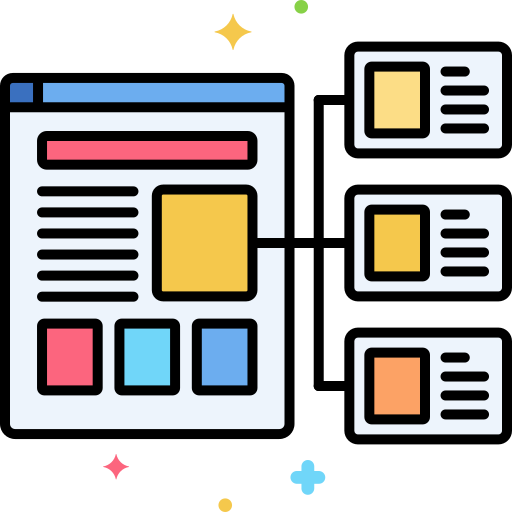
A dynamic website is an interactive platform that customizes content based on user interactions or data retrieved from a database. Unlike static websites, dynamic sites generate content in real-time, offering personalized experiences for each visitor. These websites are ideal for e-commerce, blogs, social networks, and other applications where content requires frequent updates. Dynamic websites utilize server-side languages like PHP, Python, or Node.js to retrieve data and render pages on the fly. They provide flexibility, scalability, and advanced functionality, allowing businesses to effectively engage users and adapt to evolving needs and trends.

E-commerce website Development
E-commerce website development involves building online platforms that enable businesses to sell products or services directly to customers. These websites incorporate key features such as product catalogs, shopping carts, secure payment processing, and user account management. Developers use technologies like HTML, CSS, JavaScript, and server-side languages such as PHP or Node.js to create responsive, user-friendly interfaces. Additionally, incorporating CMS platforms like WordPress or Shopify can simplify the development process. Well-designed e-commerce websites improve user experience, drive sales, and provide analytics tools for performance tracking, making them essential for businesses looking to succeed in the digital marketplace.

Enterprise Resource Planning (ERP)
Enterprise Resource Planning (ERP) is a software solution that centralizes and integrates various business processes within an organization. ERP systems bring together key functions such as finance, human resources, supply chain management, inventory, and customer relationship management (CRM) into one unified platform. This integration allows businesses to operate more efficiently and make informed, data-driven decisions.

CRM
Customer Relationship Management (CRM) is a strategy and software solution designed to help businesses manage and analyze interactions with current and potential customers. By centralizing customer data, CRM systems enable organizations to improve customer service, drive sales growth, and enhance customer retention.
CMS
A Content Management System (CMS) is a software application that allows users to create, manage, and publish digital content on websites without needing advanced technical skills. CMS platforms simplify the process of managing website content by providing an intuitive interface for editing and organizing text, images, videos, and other media.
UI/UX Design
UI/UX design is a crucial aspect of web development that focuses on creating user interfaces (UI) and user experiences (UX) that are both visually appealing and highly functional. This discipline involves designing the layout, visual elements, and overall interaction of a website to ensure it is intuitive, engaging, and easy to navigate.